

How to Find a Trusted Casino in Canada
Choosing an online casino involves more than comparing a welcome headline or counting available games. Canadian players should examine the operator’s legal position, ownership information, account rules, payment conditions, verification process and support standards before deciding whether it deserves trust. A promotional page such as lussurio casino bonus may be useful for checking published offer details, but it should form only one part of a wider assessment. The most reliable approach is to separate verifiable facts from promotional claims and identify the conditions that could affect your account later.

Start with the operator’s legal position
The first question is not whether a casino looks polished, but who operates it and under which regulatory framework. Look for the legal company name, licensing body, licence number, registered jurisdiction and terms explaining which customers may use the service. These details should be visible in the footer, terms or responsible-gambling pages. If important information is missing, difficult to locate or inconsistent across pages, treat that as a reason to investigate further rather than assuming the operator is trustworthy.
Canadian readers should also distinguish between provincial regulation and offshore operation. A casino appearing in Canadian-facing listings is not automatically registered with a Canadian provincial regulator. An offshore licence may establish that an operator is supervised under another jurisdiction’s rules, but it does not provide the same framework as a provincial registration. This distinction can affect complaint routes, consumer protections and the authority responsible for reviewing disputes.
Do not rely on a licence logo alone. Check whether the licence number, company name and stated operator match one another, and read the terms for governing law and dispute procedures. A credible site should explain account restrictions, identity checks, bonus disputes and payment reviews in reasonably clear language. If the operator’s information cannot be independently matched or the wording is unusually vague, choosing a different service may be the more sensible decision.
Test whether the game catalogue is transparent
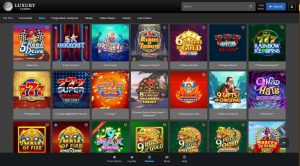
A large catalogue can be useful, but size is not proof of quality or fairness. A trusted casino should make it reasonably easy to browse by game type, provider or feature instead of presenting an unstructured collection of promotional tiles. Useful categories may include slots, table games, live dealer games, jackpots, instant-win titles and specialty games. Clear game information helps you understand what is being offered before you create expectations about the platform.
Provider names are another useful comparison point. When a site identifies studios behind its games, readers can investigate whether those providers are established and whether the displayed title appears in the provider’s own catalogue. This does not guarantee that every game will suit your preferences, nor does a short trial prove return-to-player performance or volatility. It simply makes the catalogue easier to assess and reduces reliance on unexplained claims.
Pay attention to how promotional play interacts with the catalogue. Bonus terms may exclude live dealer games, crash games, instant-win products or selected providers, or they may assign different contribution rates to each category. A casino can advertise thousands of titles while a promotion applies to only a small portion of them. Before accepting an offer, identify eligible games, maximum bets, expiry periods and any rules that could cancel bonus funds.
Read the money rules before making a decision
Payment information deserves careful reading because the displayed minimum, maximum and processing time may differ by currency, method and account status. Check whether Canadian dollars are supported, which methods are available to your account, and whether a method is deposit-only or also supports withdrawals. Do not assume that a payment option listed in a general guide will appear in your cashier or work with your bank.
Withdrawal rules are especially important. Look for minimum withdrawal amounts, transaction ceilings, pending periods and possible method restrictions. Some operators require a withdrawal to return through the payment method used for a deposit, while others may request proof that the method belongs to you. The published processing estimate may cover only the operator’s internal review and not the time required by a bank, card network or e-wallet.
Also determine whether deposits must be wagered before withdrawal when no bonus is involved. Promotional terms can add a separate requirement based on the deposit, bonus or both. Rather than treating an advertised percentage as cash value, calculate what must actually be played and whether excluded games affect progress. The problem gambling information from CAMH is also a useful reminder that gambling funds should be treated as discretionary spending, not as a financial plan.
Look closely at identity checks and account restrictions
Identity verification is normal in regulated gambling and financial transactions, but trustworthy handling still matters. Before registering, read what information may be requested, when checks can occur and how documents are submitted. Typical requirements can include government-issued identification, proof of address and evidence that a payment method belongs to you. An operator should explain these requirements without suggesting that verification is optional when it is needed for an account or withdrawal.
Account rules should clearly address duplicate registrations, inaccurate personal details, changes of address, bonus abuse and restricted jurisdictions. Read these provisions before opening an account, because a second account or mismatch between your registration details and documents may lead to restrictions. Never use someone else’s payment method or provide information that cannot be verified. Accurate registration details make later reviews less complicated.
Look for a stated support route and keep records of important conversations, deposits and withdrawals. If verification is delayed, ask support which document is missing and whether the review concerns identity, payment ownership or game activity. Be cautious if explanations change repeatedly or if the site asks for sensitive information through an unverified channel. A professional process may take time, but it should still provide a clear request and a reasonable way to respond.
Compare support and control tools, not just promotions
Customer support is easiest to judge before there is a problem. Check whether the operator provides live chat, email or another identifiable contact route, and test whether basic questions receive specific answers. Ask about a term you have already read, such as the withdrawal minimum or bonus expiry, and compare the response with the published rules. Vague replies to simple questions suggest that resolving a more serious dispute may be difficult.
Account-control tools are another meaningful trust signal. Look for deposit, loss, wagering or session limits, reality checks, cooling-off periods and self-exclusion. These controls should be accessible without requiring a customer to negotiate with support. Read how quickly a limit takes effect, whether it can be raised immediately and what happens to promotional balances during a cooling-off or self-exclusion period.
Finally, compare the overall conditions rather than choosing the largest headline offer. A smaller promotion with clear eligibility, reasonable expiry rules and understandable wagering terms may be easier to evaluate than a much larger package with multiple restrictions. Before depositing, save the relevant terms, confirm the currency and decide how much time and money you are prepared to spend. Trust is built from consistent information, accessible controls and workable complaint handling—not from a banner alone.
Questions Canadian players often ask
Does a Canadian-facing casino automatically have Canadian approval?
No. A site may accept or advertise to Canadian customers while operating under an offshore licence rather than provincial registration. Check the operator’s stated jurisdiction, licence details and dispute process. Do not infer legal status, consumer protection or availability solely from Canadian currency, language or marketing.
Is a large game catalogue evidence that a casino is trustworthy?
No. A large catalogue indicates breadth, not reliability. Compare provider information, game categories, bonus contribution rules and the clarity of the terms. A trustworthy assessment also requires checking the operator, payment conditions, verification process, support quality and account-control tools.
What should I do if the terms are unclear?
Ask support for a written explanation before depositing or accepting a promotion. Keep the response with the relevant terms and avoid relying on verbal assurances that contradict the site. If key conditions remain unclear, do not proceed until you can understand the possible costs, restrictions and withdrawal requirements.